Lumix L10 Review: Panasonic's Most Exciting Compact Camera Yet?
23 June 2026

For the past few years, compact cameras have enjoyed an unexpected resurgence. With photographers and content creators looking for cameras that deliver exceptional image quality without the bulk of interchangeable lenses, manufacturers have once again begun investing in premium fixed-lens cameras.
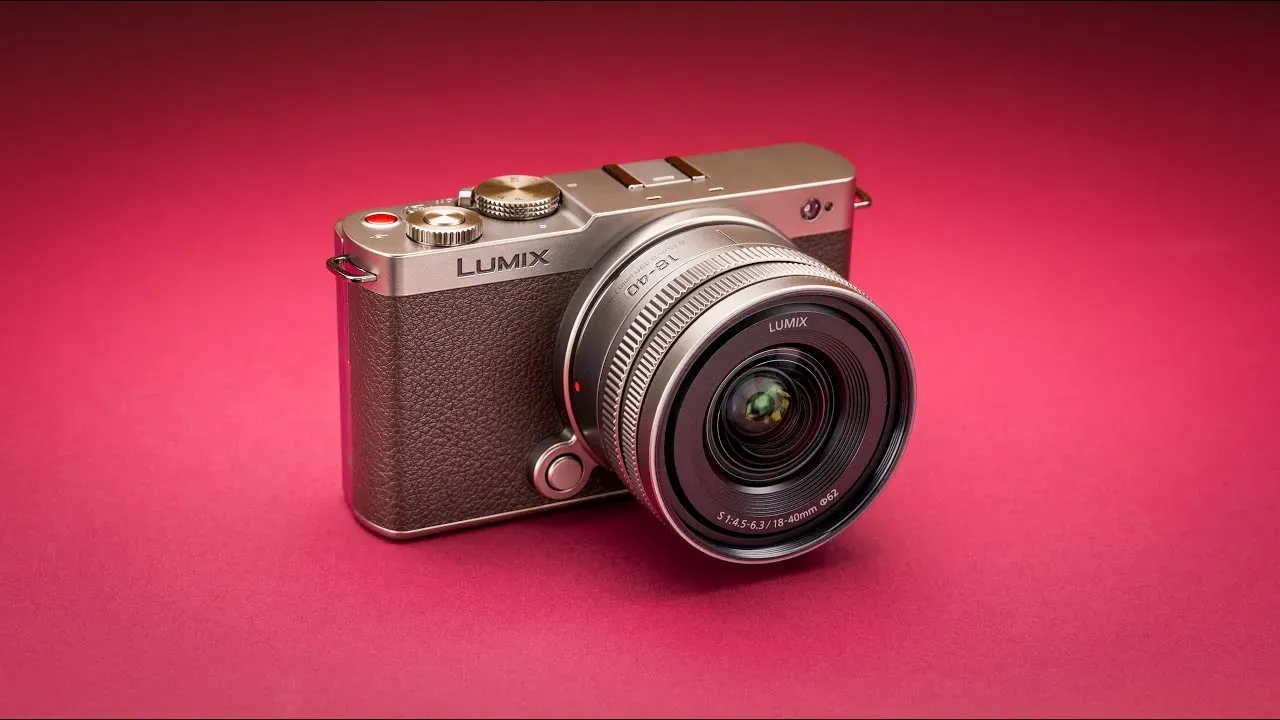
Panasonic's new Lumix L10 enters this growing market with an ambitious goal: combine the portability of a premium compact camera with many of the advanced features found in the company's larger mirrorless systems.
After spending several weeks shooting with the camera across Japan, Vietnam, and Thailand—capturing roughly 30,000 photos alongside extensive video footage—it becomes clear that the L10 is much more than a simple point-and-shoot. It offers a genuinely capable hybrid shooting experience, albeit with a few compromises.
A Premium Step Forward
The first thing that stands out about the Lumix L10 is just how much more premium it feels compared to Panasonic's smaller S9 series.
The improvements aren't dramatic on paper, but they become obvious the moment you pick the camera up.
The buttons offer noticeably firmer, more tactile feedback, eliminating the soft, spongy feel found on some previous models. Meanwhile, the aluminium construction of both the top and bottom plates gives the camera a reassuring solidity that makes it feel far more expensive than earlier compact Lumix models.
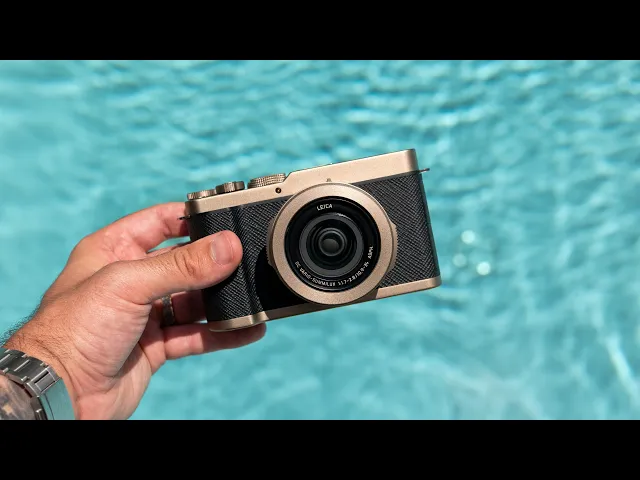
Even after accidentally knocking the camera within the first twenty minutes of ownership, the finish proved surprisingly resilient. On the Titanium Gold version, the colour extends through the material rather than simply being painted onto the surface, making small scratches far less noticeable.
Overall, Panasonic has done an excellent job improving the perceived build quality without significantly increasing the camera's size.
Outstanding Customisation
Where the Lumix L10 truly distinguishes itself is through its level of customisation.
Nearly every button on the camera can be reassigned to suit individual shooting preferences, and Panasonic has thoughtfully separated photo and video settings, allowing entirely different control layouts depending on what you're shooting.
The mode dial includes:
Four dedicated custom modes
A fifth custom position that can itself store three separate presets
Combined with the dedicated Photo/Video switch, this effectively gives photographers access to an enormous number of personalised shooting configurations.
For experienced Lumix users, the customisation options are among the camera's biggest strengths.
The Three-Way Lens Switch
One particularly clever feature is the three-position switch located on the lens barrel.
By default, this changes your aspect ratio.
However, Panasonic allows it to be reassigned to virtually any compatible function.
Perhaps the most useful option is Step Zoom.
Rather than continuously zooming through the focal range, Step Zoom allows users to instantly jump between three preset focal lengths.
For example:
24mm
50mm
75mm
This creates a shooting experience that feels remarkably similar to swapping between prime lenses.
It's also possible to configure the camera so that every time it's switched on, it immediately returns to a favourite focal length—ideal for photographers who predominantly shoot at 35mm or 50mm equivalents.
Small workflow improvements like this make the camera feel considerably faster in everyday use.
The Lens: 24–75mm f/1.7–2.8 Equivalent
At the heart of the L10 is a built-in zoom lens offering a full-frame equivalent focal range of 24–75mm with a variable maximum aperture of:
f/1.7 at the wide end
f/2.8 when fully zoomed
This covers an extremely practical range for everyday photography.
Internally, the lens contains 11 elements arranged into eight groups, and while Panasonic claims it's different from the optics used in previous LX100 and Leica D-Lux cameras, its overall design feels familiar.
The front filter thread measures just 43mm, meaning anyone wanting to attach neutral density or polarising filters will need unusually small accessories.
Although step-up rings can be used, fitting a much larger filter to such a compact camera quickly ruins its elegant proportions.
For many owners, investing in dedicated 43mm filters will likely be the cleaner long-term solution.
Common Concerns: Dust, Size and Battery Life
Whenever Panasonic announces a fixed-lens compact camera, one concern inevitably resurfaces: dust.
Because the lens extends and retracts every time the camera powers on and off, many photographers worry that it effectively acts like a small vacuum, gradually pulling dust into the camera body. Unlike interchangeable-lens cameras, there's no easy way to remove the lens and clean the sensor should dust eventually become an issue.
It's a valid concern, particularly given that some owners of previous Lumix LX100 models experienced sensor dust after years of use.
However, after approximately 30,000 images and extensive video recording, there were no visible signs of dust affecting image quality.
Of course, long-term reliability remains to be seen, and only time will reveal whether the L10 develops the same reputation as its predecessors.